Somebody at your Thanksgiving table probably knows your athlete’s jersey number by heart.
Does your athlete know what number that person wore?
Next week, a lot of us will sit down with people we don’t get to see nearly enough. I’d love for our kids to go home with one story they’d never heard before.
This Thanksgiving, let your athlete do the asking.
Invite them to sit next to the oldest player at dinner and pick a question to start with.
If an answer starts with “Well, your uncle tells this one differently,” the other questions can wait.
If they never played a sport, try “What did you rush off to do after school?” Band practice and a first job can make for good stories, too.
In August, we shared their team photo from a tournament for players 85 and older. Maybe the next question is “When can I come watch you play?”
MEET THE TEXAS EXPRESS →Lou Gehrig played 2,130 games in a row for the New York Yankees. For almost 14 years, he never missed one.
Then in the spring of 1939, something was wrong. A man with a .340 career average was hitting .143. In May, he took himself out of the lineup.
That June, on his 36th birthday, doctors told him he had ALS, the disease that now carries his name. There was no cure.
Two weeks later, on July 4, the Yankees held Lou Gehrig Appreciation Day. Between games of a doubleheader, he walked up to the microphone at home plate and spoke.
This is how he started:
Then he spent the rest of the speech thanking everyone. The fans, his managers, the groundskeepers, his mother-in-law, his parents, and his wife.
And here’s how he finished:
His career ended with the worst break imaginable, and he spent his goodbye saying thank you.
Lou had every reason to talk about what he lost. Instead, he talked about everything he still had.
PBS made a short video of the whole thing. You can also read it at Baseball Hall of Fame.
YOUNGER ATHLETESLou found out he couldn’t play baseball anymore. Why do you think he still called himself lucky?
OLDER ATHLETESIs it harder to be thankful when things are going badly? How do you think Lou did it?
Hand out pens and scrap paper. Have every player finish one sentence:
“I’m lucky to be on this team because…”
Collect them, then read them out loud without names.
Pick one hard thing from this year that your athlete still wishes had gone differently: a tough loss, an injury, a season that didn’t go the way they hoped.
Then write down who and what they’re thankful for anyway.
Make sure they include one person nobody would expect them to thank, the way Lou thanked the groundskeepers.
If they’re brave, they can read it at Thanksgiving dinner. If not, they can hand it to someone on their list.
Lou Gehrig lost the game he loved, and he still stood at home plate and called himself lucky because of the people around him.
This Thanksgiving, make sure yours hear it too.
Thanksgiving is a day off for a lot of people, but not everyone.
Somebody’s up early with the turkey. Somebody’s working a shift. Somebody’s doing the dishes while everyone else watches football.
Then ask, What part of their day could you take over?
Then let them do it. The dishes, the dog, the little cousins, the trash.
Thanksgiving is a great day to start.
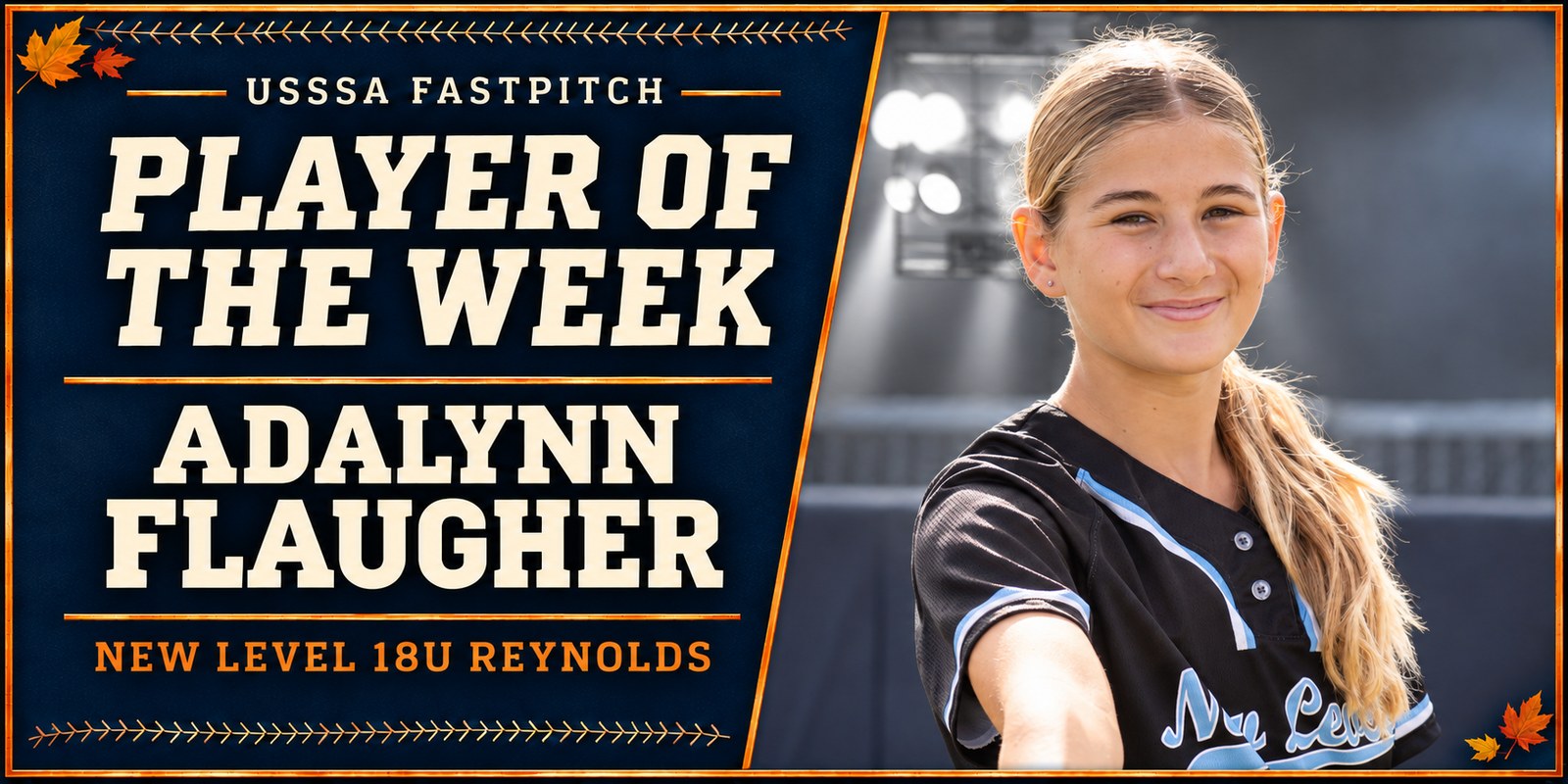
When a pitcher forgot her bag, 15-year-old Adalynn Flaugher lent her a pair of her own cleats.
Ask Adalynn what she does best at shortstop, and her answer is about the teammate in the circle, too. She says it’s helping her pitchers get out of their own heads when they’re struggling.
Adalynn covers a lot of ground at short, loves diving for line drives, and can turn a double play. At the plate, she knows how to lay down a bunt for a hit.
Congratulations, Adalynn!
You’re usually the first to cheer for everyone else.
This week, we get to cheer for you.
Next week, a lot of us will go around the table and say what we’re thankful for.
We’ll go first.
We’re thankful for every coach, parent, umpire, director, volunteer, and athlete who makes a USSSA weekend happen.
Happy Thanksgiving from all of us at USSSA.
We’ll see you after the holiday.