Before we begin this week’s issue of Beyond the Scoreboard, we want to honor someone who meant a great deal to USSSA and the baseball community.
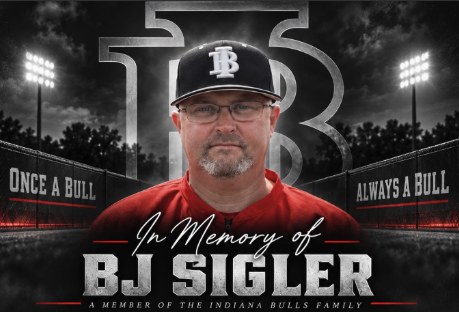
We are saddened by the passing of BJ Sigler, a USSSA Baseball director, Indiana Bulls coach, and deeply valued member of our community.
BJ was an important part of USSSA. His absence will be felt by the people who worked alongside him and the players and families he served.
BJ also had the chance to coach his sons, Brycen and Cole, with the Indiana Bulls. The Bulls have shared a tribute reflecting on those memories and his time with their organization.
We will miss BJ and remain grateful for all he gave to the game and to this community.
READ THE INDIANA BULLS’ TRIBUTE →
With the weight of today on our hearts, we still wanted to bring you this week’s Beyond the Scoreboard. Baseball and Fastpitch don’t always give us the answers, but they do give us space to be together and to keep growing.
This week, we’re back in How Champions Think for Chapters 6 through 10, meeting our Player of the Week, and asking one more question for the car ride home. And with October just around the corner, we’re carrying USSSA’s Breast Cancer Awareness Hat Collection into this issue so you can order ahead.
These next five chapters take the mindset ideas we started with and turn them into action: how to move from dreaming to doing, how to focus, how to keep going, and how to look back at your work honestly.
A dream gives you somewhere to go. A goal gives it shape. A process gives you something to do today.
Wanting to become a more dependable hitter is a starting point. Choosing a skill to work on, making time to practice, and following through each week gives that goal a process.
The dream can be big. The next step can be small.
Ask your athlete to name one goal that excites them, then work backward:
“My goal is __________. This week, I’ll work toward it by __________.”
Making a plan is one thing. Giving it your full attention is another.
Rotella emphasizes making time for the work your goals require and using that time deliberately. Young athletes can start by choosing one thing to work on and giving it their attention for the time they’ve set aside.
Choose one skill to work on at the next practice and identify a distraction they can set aside.
Afterward, don’t ask “how was practice?” Instead ask:
“What did you notice when you gave that skill your full attention?”
Two players can look at the same losing season differently.
One sees proof that the team isn’t good enough. The other sees improvements, plays that worked, and mistakes they can learn to correct.
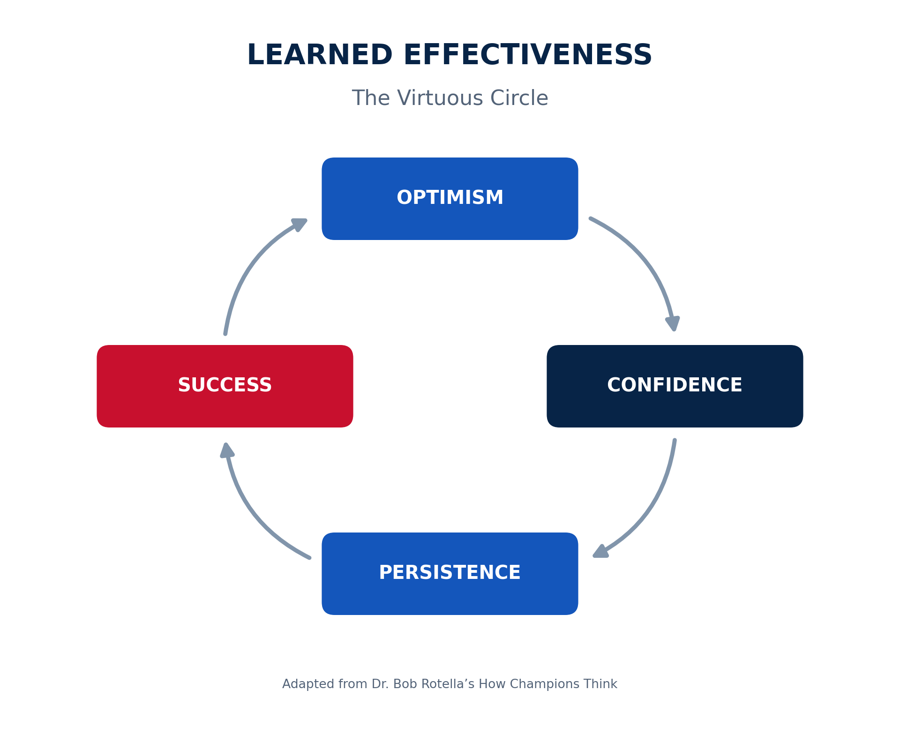
Rotella describes how optimism, confidence, persistence, and success reinforce one another through learned effectiveness.

Optimism builds confidence, confidence helps athletes persist through setbacks, and persistence helps them achieve success. That success gives them more reason to be optimistic. And the cycle continues.
After a tough loss or rough game, ask your athlete:
“What’s one thing that needs work? What’s one thing you did well?”
Write both down. The goal isn’t to ignore what needs work, it’s to prove that a hard result and real progress can exist in the same game.
An athlete can practice all week and still feel their heart racing at game time. That doesn’t mean the preparation failed.
In his work with the Cincinnati Reds, Rotella describes a familiar situation: runners on base, two outs, and a chance to win.
The hitter wants to come through for the team. But thinking about everything riding on the at-bat can pull their attention away from the pitch itself. They try to force a hit and chase a ball they might otherwise have let go.
His answer is a performance process: a familiar routine that brings them back to the pitch.
Settle into the stance. See the ball. Trust the swing they’ve practiced.
They don’t have to wait until they feel calm to use it.
Help your athlete work with their coach to choose a short routine. For a hitter:
SET YOUR FEET. TAKE A BREATH. SEE THE BALL.
Practice it during ordinary reps so it becomes familiar before a pressure moment arrives.
A hit doesn’t always mean a good decision. An out doesn’t always mean a bad at-bat.
Rotella encourages athletes to evaluate how faithfully they followed their process: Did they prepare? Stay with their routine? Give their practice time real attention?
Save that reflection for afterward. During the performance, trust the preparation. Then look back and make adjustments.
Ask your athlete:
“If you were your own coach, what would you tell yourself to keep doing? What would you change?”
Try this after wins, too. A good result can still leave something to work on.
For nine issues, we’ve given you a question to ask your kid. This week, we’re flipping the script.
Be prepared.
If you invite the question, make room for the answer. They might ask something you didn’t realize they’d been wondering about.
Take it seriously, and be honest even if that means saying, “I need a little time to think about that.”
How you respond now can help them feel comfortable asking you questions in the future.
And if they draw a blank on what to ask,
give them a little time.
The question might come three stoplights later.
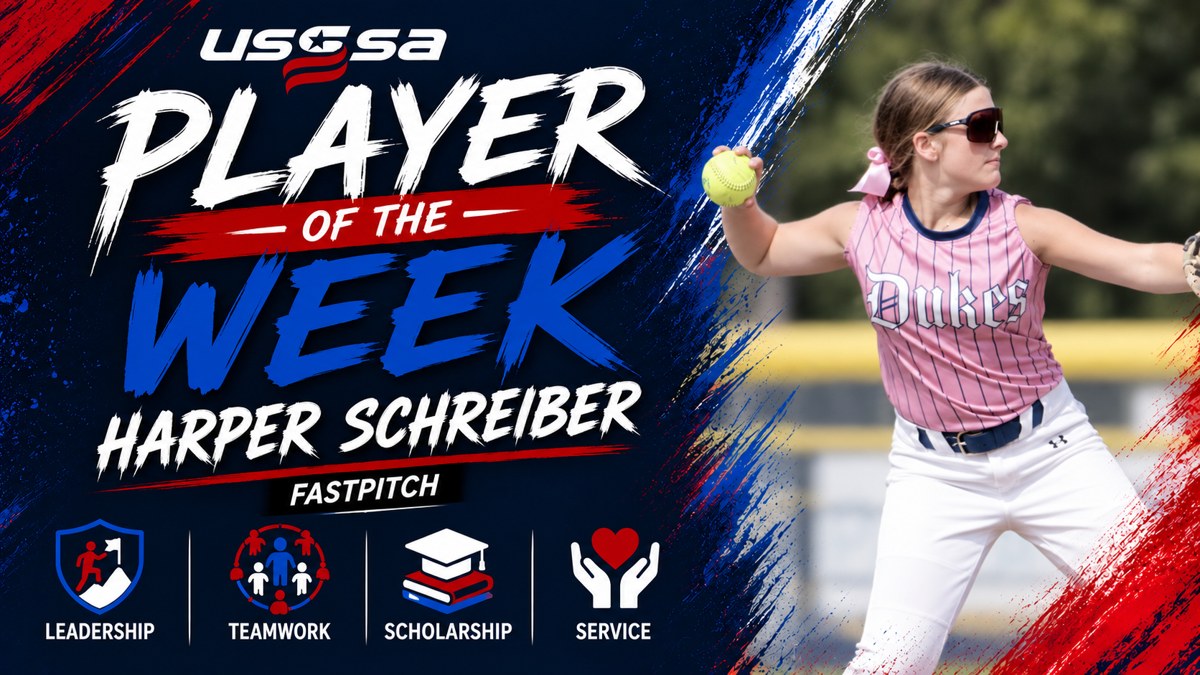
Harper Schreiber brings a team-first attitude to every position she plays, whether she’s catching, covering third base, or in the outfield.
Her parents describe her as a consistent hitter and dependable teammate who is determined to help those around her succeed.
Outside fastpitch, Harper serves as vice president of the National Junior Honor Society and received the Carson Scholarship this year, recognizing her academic achievement, character, and commitment to service.
Through her volunteer work and community involvement, she puts that commitment into practice.
Congratulations, Harper!
We’re proud to celebrate your dedication to your team, your school, and your community.
This October, USSSA is bringing pink to the fields with four limited-edition hats created for Breast Cancer Awareness Month.
The Stronger Together and Fighter designs recognize the strength of those facing breast cancer and the people standing beside them.
The collection also includes two classic USSSA designs, in pink and black.
Whether you wear yours for a fighter, a survivor, or someone whose memory you carry, we hope to see fields across the country filled with pink this October!
The collection will be available throughout October, while supplies last.
What do you want to read about?
Maybe it’s a topic we haven’t touched yet. A story or idea you’d like us to explore further. A question you wish someone would ask your kid in the car ride home.
Whatever it is, send it our way. This newsletter is for you, and we want to make it worth your Friday.