From the Playbook
This month, How Champions Think took us from the inside of a champion’s mind all the way out into how they live. We started with belief, turned belief into action, and sat with the hard parts: mistakes, patience, competition, and who gets a say in your head.
This week, we finish the book with four chapters about staying in it for the long haul: loving what you do, protecting what already works, refusing to accept someone else’s ceiling for you, and deciding, in the end, what kind of life you actually want to have lived.
CHAPTER SIXTEEN
Doing What You Love or Loving What You Do?
▾
Rotella describes enthusiasm as a catalyst. It strengthens other qualities in a champion’s mindset, including persistence. When athletes enjoy what they’re doing, it’s easier for them to keep putting in the work.
He compares sticking with something we love to biking downhill, while sticking with something we don’t love can feel like biking uphill.
It’s easy for our athletes to be enthusiastic when they’re playing well, improving quickly, and getting every opportunity they hoped for. Maintaining that enthusiasm though, gets harder when progress slows or their role on the team looks nothing like the one they wanted.
Do what you love, and if you can’t do that, then choose to love what you do.
Our athletes won’t enjoy every drill or be happy with every position they’re asked to play. But Rotella reminds us that they can choose how they approach those situations. Finding something to learn, improve, or take pride in can help them stay engaged, even when things aren’t going their way.
Ask your athlete to think through their practices, drills, specific skills, even certain teammates and positions. Sort everything into two columns: what feels like biking downhill, and what feels like biking uphill. No wrong answers.
Follow the enthusiasm. For each “downhill” item, ask: What is it about this that you love? Maybe they enjoy using a skill they’re good at, seeing themselves improve, or working with teammates. Their answers can help us understand what makes them eager to keep playing.
Reframe the “uphill.” For each uphill item, ask this follow-up instead of jumping to “just push through it”:
Is this hard because it’s genuinely not your thing, or hard because you haven’t gotten good at it yet?
Rotella’s point is that struggle is often the price of getting somewhere worthwhile. But there is a difference between productive struggle and genuine misalignment.
Maybe all they need is a little instruction, a clearer purpose for a drill, or a small goal that makes progress easier to notice:
- If they’re frustrated with a skill, ask their coach for a smaller step they can practice first to build off of.
- If a drill feels boring, help them set a small challenge within it.
- If they’re disappointed with their position, help them identify one way they want to improve in that role.
Enthusiasm needs daily renewal, so this isn’t a “have the conversation once and you’re done” exercise. Coaches could run a 2-minute version of the downhill/uphill check at the start of a rough week. Parents could do it in the car after a tough practice.
CHAPTER SEVENTEEN
Sticking with Your Bread and Butter
▾
On the regular PGA Tour, players show up trailed by entourages: swing coaches, trainers, consultants, all of them tweaking something about their game. On the Champions Tour, for golfers over 50, it’s just the player and his caddie.
The difference isn’t talent. It’s that the veterans found something that works and stopped fixing it. As Rotella puts it, “they had a method that they’d proven worked for them. They didn’t care much if anyone else liked it.”
Rotella shares the story of a young pro who had a natural bread and butter shot he could rely on. After hearing that changing his swing would make him more accurate, he made the adjustment and began struggling. Advice then poured in from his coach, trainer, caddie, and agent. He described feeling “unbelievably fragile,” thinking about a different adjustment every time he hit the ball. His bread and butter shot fell apart, and he’d lost trust in something that used to be a strength.
Contrast that with Jack Nicklaus, who learned one swing and stuck with it his entire career, going back to his original coach occasionally for a tune-up, never an overhaul. Rotella’s rule: success validates technique. If your player is struggling, seek guidance on what needs to change. If something is working, make sure there’s a clear reason to adjust it.
“There’s a happy medium between listening to everyone and listening to no one. It’s a subtle sweet spot, but it’s one that champions seem able to find.”
Ask your athlete: What’s a “bread and butter” skill you have that you feel super confident using in a game?
If they can’t name one, that’s useful information too. It might mean they’ve been tinkering too much to ever build one.
Then count the voices giving input on their technique or game play: coach, parents, trainer, YouTube, older sibling, someone who played in college.
Those tips can add up. Before offering another, ask what the athlete is already working on. Agree on a coach they can turn to when advice conflicts, and encourage them to ask:
“I’ve been told two different things. Can you help me understand what to focus on and why?”
Once there’s a clear plan, give them time to practice it before adding another adjustment.
For coaches specifically: this is also a check on your own instinct to fix things. Not every flaw needs correcting mid-season, especially with a player who’s performing. Sometimes the job is protecting a kid’s confidence in what already works rather than optimizing it.
CHAPTER EIGHTEEN
Creating Your Own Reality
▾
Exceptional people create their own reality and ignore information that suggests their dreams are unrealistic.
Ask your athlete to finish this sentence:
“Something I’d love to accomplish is…”
Then help them separate the steps from the dream:
- What’s one thing you need to learn or improve to move toward it?
- What’s one small action you can take this week?
The next step should be practical. They can start small while still dreaming big.
Parents and coaches: check your own expectations. Let the dream stay theirs. Resist the urge to make it “more realistic” or bigger than they want it to be. Help them identify what they need to learn and work on, then ask: “What would help you take that next step?”
Maybe they need someone to practice with, guidance from their coach, or encouragement to try. Check back at the end of the week, notice the effort they’ve made, and help them decide what comes next.
CHAPTER NINETEEN
A Life of Going for It
▾
The last chapter opens with the question Rotella says eventually comes up with almost everyone he works with: “What if it doesn’t work? What if I do everything right, and I still don’t make it?”
He doesn’t dodge it. He admits life can be unfair:
“There’s no trophy for the player who worked the hardest; the trophy goes to the player who used the fewest strokes, regardless of how he made that happen.”
Sometimes a more talented, less disciplined player passes you right by. That’s real, and pretending otherwise doesn’t help anyone.
So why try to be exceptional at all?
“The lessons we learn in sport are supposed to be what endures.”
The pursuit of being exceptional reaches beyond sports and gives us a chance to discover what we’re capable of, develop our talents, and learn lessons we can carry into the rest of our lives.
Effort matters more than outcome. For parents and coaches, that’s something we can help athletes recognize now:
- Learning to keep working through a difficult drill can help them tackle a challenging assignment.
- Recovering from an error can help them respond to a mistake at school.
- Being a dependable teammate can teach them how to show up for other people.
Athletes can want to win and still take pride in how they prepared, competed, and treated others when the result disappoints them. Those are things worth noticing throughout the season.
Closing the Book.
Champions aren’t wired differently. They’ve just practiced thinking differently. Belief, patience, effort, none of it is a personality trait you either have or don’t. It’s built the same way a swing gets built. Reps. Corrections. Enough enthusiasm to keep showing up for it tomorrow.
Throughout the book, he reminds us that our athletes get opportunities to strengthen this skill every time they try something difficult, recover from a mistake, or keep working toward a goal.
If your player takes exactly one thing out of this whole month, let it be this:
You can’t control the scoreboard, but you can control how you show up underneath it.
As parents and coaches, we can help them recognize that growth. We can notice when they respond differently to disappointment, support a teammate, or find the courage to try again. Those moments matter, whatever the scoreboard says.
The hope is that they carry those lessons into the rest of their lives. That they keep learning, pursue things they care about, and like the person they see in the mirror along the way.
Player of the Week
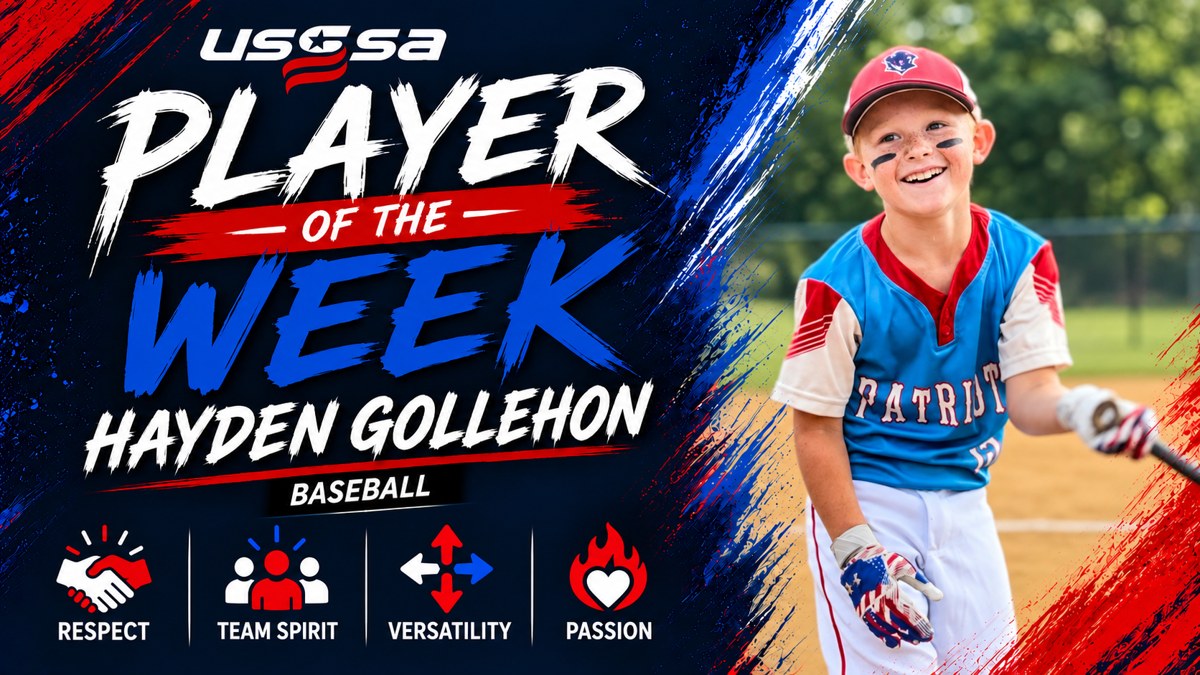
Hayden Gollehon’s glove carries a reminder:
“Your character will always outshine your talent.”
And there’s plenty of talent. Hayden went a combined 6-for-6 in back-to-back games, with a season batting average of .625 and a slugging percentage of .875.
|
6‑for‑6
BACK‑TO‑BACK GAMES
|
.625
SEASON BATTING AVG
|
.875
SLUGGING %
|
But his mom, Lynsey, is just as proud of the connections he makes. Hayden learns names, shakes hands, and makes friends with players on both sides of the field. He brings that energy to warmups and the games, too, sometimes with a few dance moves.
Whether he’s playing center field, shortstop, second base, or pitching, Hayden steps into the role his team needs without hesitation. He loves being out there, and respect for coaches, teammates, opponents, and umpires is part of how he plays.
Congratulations, Hayden!
Thanks for showing how much a player can bring to a team, wherever they’re playing.
The Car Ride Home
As September’s Self‑Improvement Month wraps up, let’s finish it by getting the whole family involved.
This Week’s Question
Let your child answer before offering ideas. They might choose something you hadn’t realized needed attention. Together, pick a goal or two to start with.
Then give your household a team name, and ask: “What can each of us do to help?” Make sure everyone has a part to play, adults included.
- Wednesday family game nights.
- A 15‑minute tidy after dinner, with everyone pitching in.
- Getting clothes and bags ready the night before so school mornings feel less rushed.
- And one for my husband and I (because the adults on this team need practice, too): asking our kids what happened and taking time to understand before reacting out of frustration.
Let us know
your team’s goals!
Who Do You Wear Pink For?

This October, USSSA is bringing pink to the fields with four limited-edition hats created for Breast Cancer Awareness Month.
The Stronger Together and Fighter designs recognize the strength of those facing breast cancer and the people standing beside them.
The collection also includes two classic USSSA designs, in pink and black.
Whether you wear yours for a fighter, a survivor, or someone whose memory you carry, we hope to see fields across the country filled with pink this October!
The collection will be available throughout October, while supplies last.
We Want to Hear From You.
What do you want to read about?
Maybe it’s a topic we haven’t touched yet. A story or idea you’d like us to explore further. A question you wish someone would ask your kid in the car ride home.
Whatever it is, send it our way. This newsletter is for you, and we want to make it worth your Friday.